
Update, October 5, 2026: The Justice Department has confirmed it will not appeal. In a September 24 letter to the Senate Judiciary Committee, filed in court on October 1, the Solicitor General said DOJ “has determined not to file an appeal.” The injunction, in effect since August 13, stands. ATF says implementation guidance is coming within weeks, and nine plaintiff states have asked the court to clarify how far the order reaches.
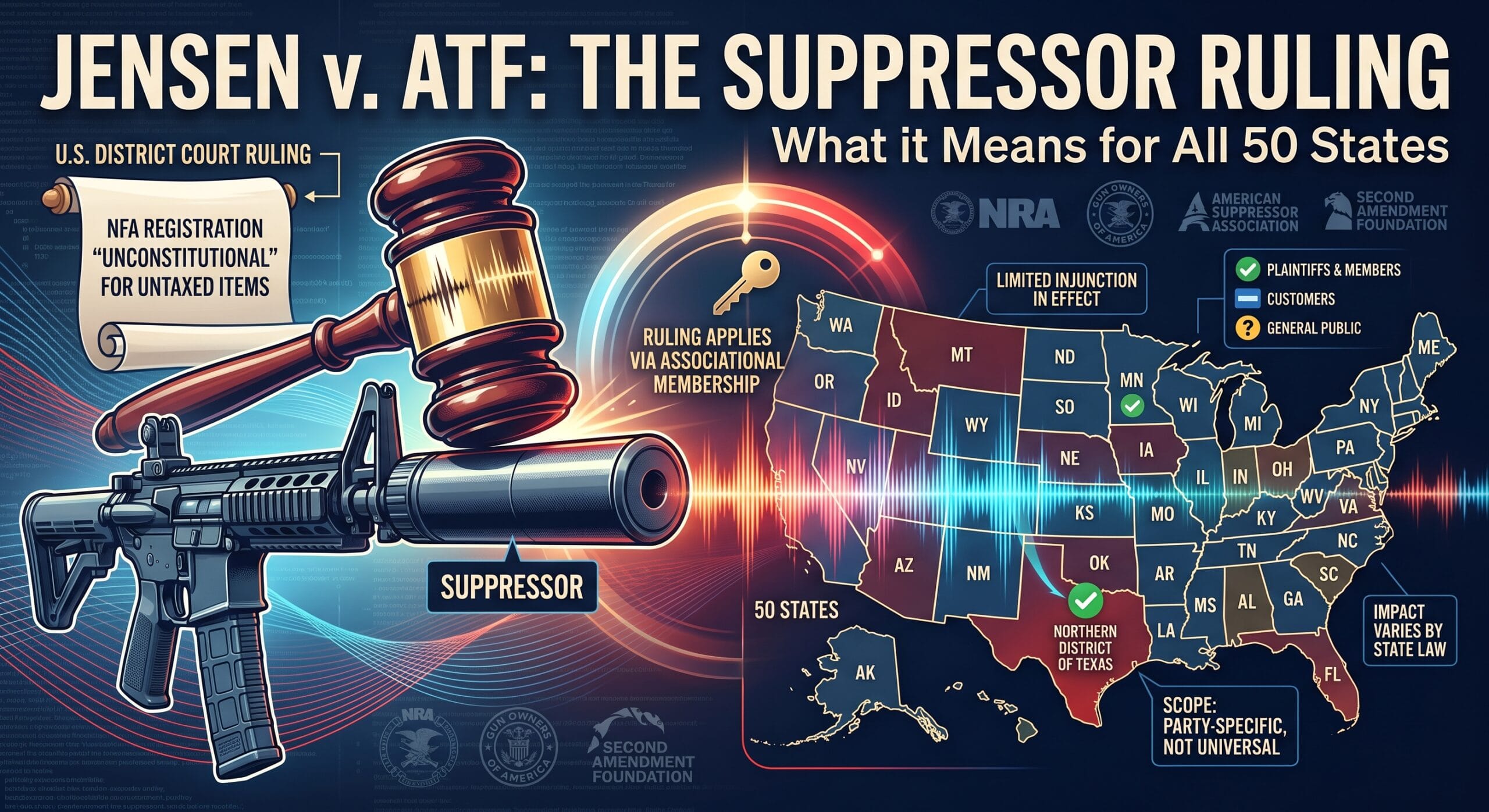
Short answer: Jensen v. ATF is real and important, but it did not deregulate suppressors nationwide. It blocks ATF from enforcing NFA registration and approval rules for suppressors, short-barreled rifles and shotguns (and AOWs on one side of the case) against covered people only. For most North Carolina buyers, the standard eForm 4 process still applies, now with a $0 tax and approvals measured in days.
This is general education, not legal advice. If your situation involves a trust, an LLC, a pending Form 4 or membership in a plaintiff organization, talk to a firearms attorney before you act.
How We Got Here
The National Firearms Act of 1934 put suppressors, short-barreled rifles and shotguns, machine guns and a few other items behind a $200 tax and a federal registration system. Here’s the detail that mattered in 2026: Congress passed the NFA as a tax law. The Supreme Court upheld it in 1937 as a revenue measure, with registration existing to support tax collection.
Then the One Big Beautiful Bill Act cut the tax on suppressors, SBRs, SBSs and AOWs to $0, effective January 1, 2026. The paperwork stayed. The tax didn’t. That raised the obvious question: can a tax-based registry survive with no tax to collect?
What the Court Decided
On August 5, 2026, U.S. District Judge James Wesley Hendrix (Northern District of Texas) ruled in Silencer Shop Foundation v. ATF, consolidated with Jensen v. ATF. The key holdings:
- Taxing power, not the Second Amendment. With the tax at zero, the challenged registration and approval requirements can no longer rest on Congress’s taxing power. The court also rejected saving them under the Commerce Clause. It did not reach the Second Amendment claims.
- Not nationwide. The permanent injunction protects the plaintiffs and, where applicable, their agencies, political subdivisions, and current and future members and customers.
- No appeal. DOJ let the seven-day stay lapse, the injunction took effect August 13, and DOJ has now confirmed in writing that it won’t appeal.
Who Is Covered, and Who Isn’t
| Covered by the injunction | Not covered or unchanged |
|---|---|
| Named individual and business plaintiffs | Machine guns and destructive devices |
| Plaintiff states and their agencies and subdivisions | The special occupational tax for NFA dealers, makers and importers |
| Current and future members of plaintiff organizations (for example Gun Owners of America, FPC Action Foundation, CCRKBA and the Texas State Rifle Association) | AOWs for the Jensen-side plaintiffs (Silencer Shop-side relief includes AOWs) |
| Current and future customers of plaintiff businesses | Any state law, including state suppressor bans |
| Gun Control Act rules for dealer sales, including the Form 4473 background check |
Coverage questions are exactly what the nine plaintiff states asked the court to clarify. If your coverage depends on a membership, trust or LLC, get an attorney’s opinion in writing.
Where Every State Stands
| Group | States | What changes for most residents |
|---|---|---|
| Plaintiff states (15) | Alaska, Georgia, Idaho, Indiana, Kansas, Louisiana, Montana, North Dakota, Oklahoma, South Carolina, South Dakota, Texas, Utah, West Virginia, Wyoming | Protection depends on qualifying as a covered person or transaction; living there alone may not be enough |
| Suppressor-legal, non-plaintiff states (27) | Alabama, Arizona, Arkansas, Colorado, Connecticut, Florida, Iowa, Kentucky, Maine, Maryland, Michigan, Minnesota, Mississippi, Missouri, Nebraska, Nevada, New Hampshire, New Mexico, North Carolina, Ohio, Oregon, Pennsylvania, Tennessee, Vermont, Virginia, Washington, Wisconsin | $0 tax; Form 4 still required unless you’re individually covered |
| State bans (8 states + D.C.) | California, Delaware, Hawaii, Illinois, Massachusetts, New Jersey, New York, Rhode Island, Washington, D.C. | Nothing. A federal ruling doesn’t override a state ban. |
What This Means for North Carolina Buyers
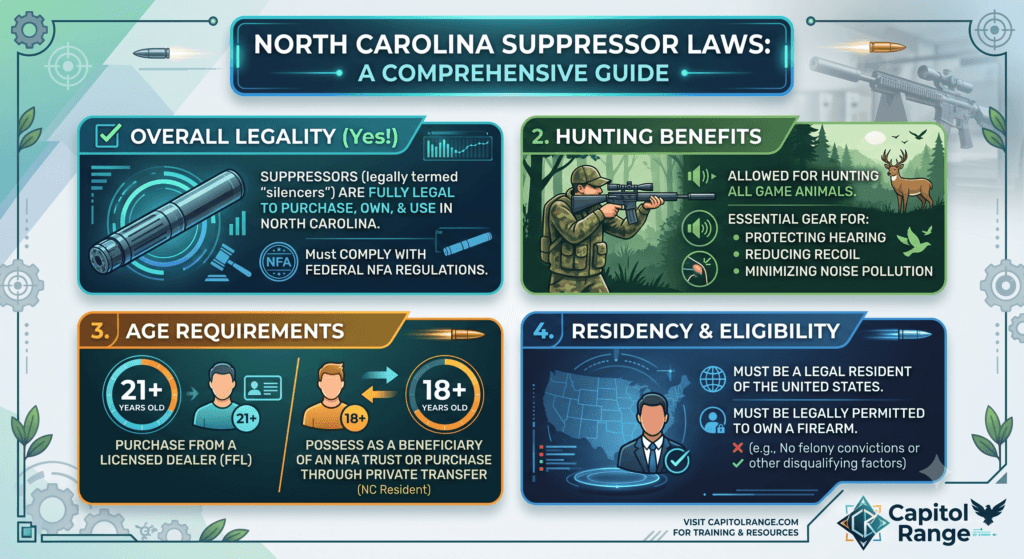
North Carolina isn’t a plaintiff state, so for most buyers here, nothing changed in practice except good news you already had:
- The tax is $0 for suppressors, SBRs and SBSs.
- The eForm 4 is still required unless you personally qualify as a covered member or customer.
- Approvals are fast. ATF data for August 2026 shows individual eForm 4s averaging about 6 days and trusts about 20.
Thinking about buying? Our North Carolina suppressor guide walks through every step, and our NFA eForms page explains what we need from you. Browse cans in our online store or at the counter in Youngsville.
What to Do Right Now
You have a Form 4 pending. Keep waiting for approval. Don’t withdraw it or take possession early.
You belong to a plaintiff organization. You may be covered, but confirm with an attorney how membership, trusts or LLCs affect your specific transaction.
You’re a typical North Carolina buyer. File your eForm 4 as usual. With a $0 tax and single-digit approval times, it’s never been easier.
You live in a ban state. Jensen doesn’t change your state law. Watch the separate state-level challenges instead.
What to Watch Next
- ATF guidance. ATF’s director has said guidance on covered transfers and interstate travel is coming within weeks.
- The plaintiff states’ clarification request. The court’s answer will define how broadly coverage applies inside those states.
- Parallel cases. Related NFA challenges in Kentucky (Brown v. ATF) and elsewhere could extend similar relief to other groups.
- Congress. Lawmakers could restore even a nominal tax, rebuild the registry on another legal basis, or pass the Hearing Protection Act to remove suppressors from the NFA entirely.
We’ll keep updating this page as guidance arrives.
Frequently Asked Questions
Did DOJ appeal Jensen v. ATF?
No. DOJ let the stay lapse in August and confirmed in a September 24, 2026 letter to Congress, filed in court October 1, that it will not appeal. The permanent injunction stands.
Does Jensen v. ATF make suppressors legal everywhere?
No. The injunction protects only covered plaintiffs, members and customers, and state bans in eight states and D.C. are unaffected.
Do I still need a Form 4 to buy a suppressor in North Carolina?
For most buyers, yes. North Carolina isn’t a plaintiff state, so you still file an eForm 4 unless you personally qualify as a covered member or customer. The tax is $0.
Is the $200 suppressor tax stamp gone?
Yes. The One Big Beautiful Bill Act reduced the tax on suppressors, SBRs, SBSs and AOWs to $0 effective January 1, 2026.
Does the ruling cover machine guns?
No. Machine guns and destructive devices remain fully regulated under the NFA.
This article is for general educational purposes and is not legal advice. Firearms law is changing quickly in 2026; verify current requirements with ATF and a licensed attorney before acting.